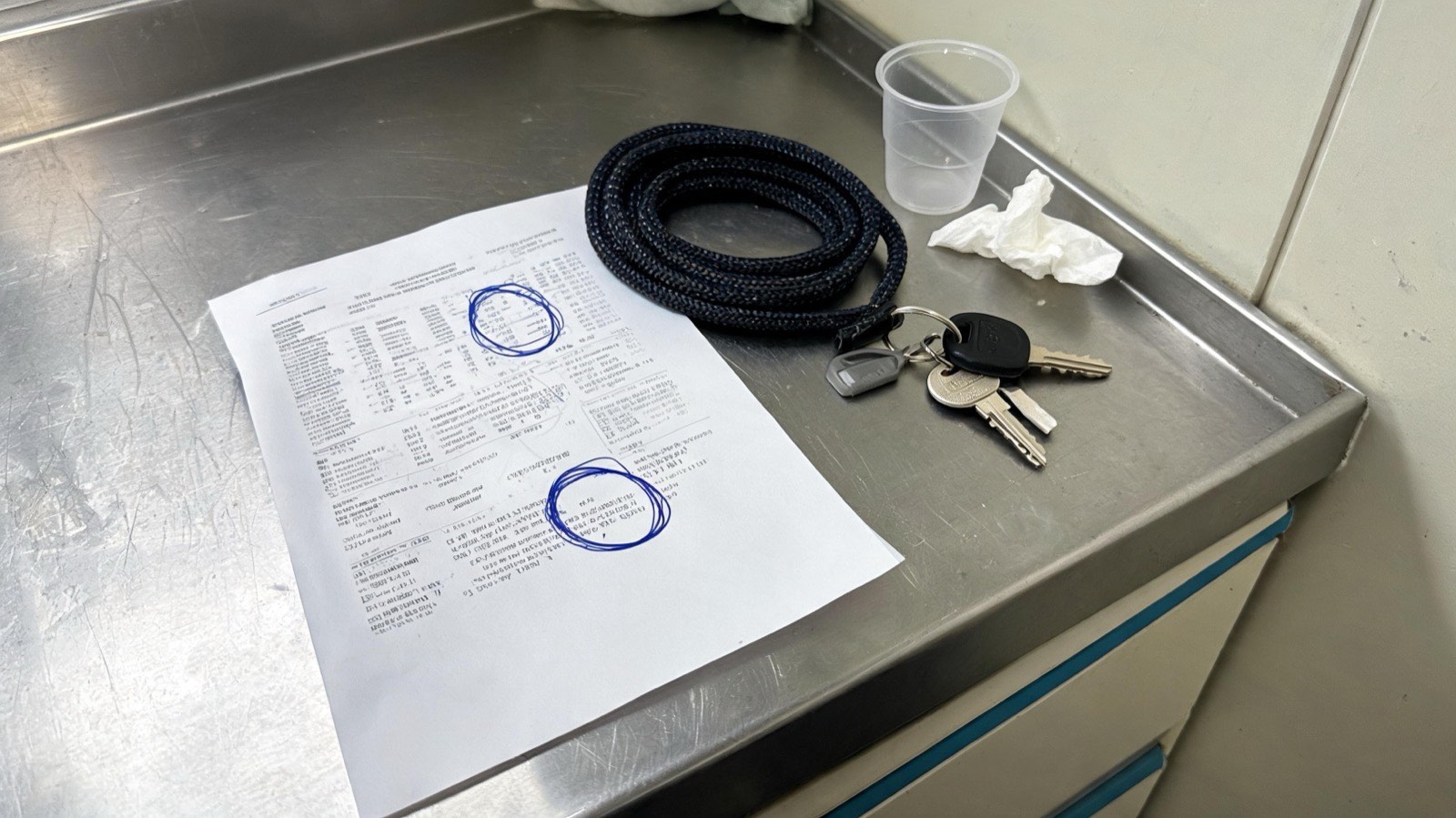
The woman in room two had highlighted her dog's bloodwork in three colors before she got out of the car. Yellow for every line with an H next to it, pink for the L's, green for the two she'd already looked up on her phone in our lot. The dog, Junie, fourteen, black lab, was on the floor working on a treat crumb somebody dropped near the scale. Junie was fine. Her owner's hands were not.
I've watched a version of that a few hundred times. The senior panel is the most upsetting piece of paper we hand anyone, and most of the upset is vocabulary. Nobody explains the columns. The machine flags anything outside a range with a letter that looks like a grade on a test, and then you take it home.
So here's what I say in the room while the doctor finishes up next door, and I'm putting it at the top because it's the whole point: a flagged number is a question, not an answer. I'm a technician. I don't diagnose, and neither should you, and I mean that kindly. What follows is vocabulary, so the eleven minutes you get with your vet go toward your actual question instead of toward somebody explaining what BUN stands for.
(Kelsey wrote that headline, not me. I've never explained anything to anyone like they were five. I've explained things slowly. There's a difference and I'll defend it.)
Why the paper looks worse than the dog
Reference ranges come from a pile of other dogs. Yours is not that pile. Plenty of healthy animals live their whole lives a hair outside a range on one value, and the flag is automatic.
No human looked at your dog and decided to put an H there.
Ranges move between labs, too. Our in-house analyzer and the send-out lab we use don't run the same numbers, so a value flagged in October and clean in March may not have budged at all.
What I actually want off a panel is a direction. One panel is a photograph; two panels a year apart start to say something. That's the argument for running boring wellness bloodwork on a healthy senior, which I know feels like paying $180 to be told nothing is wrong. You're paying for next year's comparison.
Junie was in that day because she'd started taking the stairs one at a time, one of those quiet changes people file under old age and mention on the way out the door. The bloodwork was routine. The highlighters were her owner's own idea.
BUN and creatinine, the kidney-shaped questions
BUN is blood urea nitrogen. Protein gets broken down, urea is what's left over, kidneys clear it out. Creatinine comes out of muscle at a fairly steady rate and also leaves through the kidneys. They travel together, which is why they sit next to each other on the page.
Both climb when kidneys aren't clearing the way they used to. Both also climb when a dog is simply dry. A dog who threw up on the drive in, or ate a big meal an hour before the draw, can hand you a number that looks alarming and means she needs water and a do-over.
Creatinine has a wrinkle nobody mentions: it comes from muscle. A skinny, muscle-wasted fifteen-year-old can produce a creatinine that looks beautifully normal, because there's not much muscle left to make it. A thick-necked young shepherd can sit near the top of the range for life and be fine. The number means something different depending on the body it came out of.
So the question those two ask is: dry, or kidneys losing ground? A urine sample usually settles it faster and cheaper than another blood draw. Which is why we ask you to walk in carrying your dog's pee like a party favor.
The liver numbers people google at midnight
ALT is an enzyme that lives inside liver cells. When those cells are irritated or dying, ALT leaks into the blood: more leaking, higher number. It doesn't tell you why, and it doesn't tell you how well the liver is working. Irritation and function are separate questions printed on the same page.
ALP, alkaline phosphatase, causes more Sunday-night panic than anything else on the sheet. In dogs it comes from more than one place, including the biliary system and bone, and it climbs with steroids, including the dog's own cortisol. Older dogs run a mildly high ALP all the time. Sometimes it matters enormously, sometimes it's background noise for six years, and your vet is weighing it against the dog in front of them. The internet can't do that part.
Albumin, the one I read first
Albumin is a protein the liver makes. It holds fluid inside blood vessels. I look at it before anything else, which is a personal habit, not a protocol. Don't quote me to your vet as doctrine.
It drops for reasons that all deserve a second look: the gut leaking protein, the kidneys spilling it, chronic inflammation, a liver not making enough. Low albumin earns a follow-up. High albumin is usually dehydration, which by now you've probably noticed explains an unreasonable share of the weird numbers on this page.
About that low T4
Total T4 gets added to a lot of senior panels and misread constantly, including by me, about a decade ago. A low T4 on its own doesn't mean a dog is hypothyroid. Dogs sick with something else entirely will run a low T4 because the body dials it down, and several common medications push it down too.
Slow that one down. Ask whether free T4 and TSH belong in the conversation before the prescription does.
Then go the other direction and start with the animal. Weight gain with no change in food. A coat gone thin and dull. That picture next to the labs is worth more than either alone. And if the weight went the other way, if your dog dropped four pounds and you can't swear the scoop stayed the same, two weeks of actually weighing the food answers that faster than another blood draw will.
The cheat sheet
| What the printout says | What it means in plain English |
|---|---|
| BUN | Kidney-cleared leftover. Rises on a dry dog about as readily as a failing one. |
| Creatinine | Muscle byproduct the kidneys clear. Reads differently on a wasted dog. |
| ALT | Leaks from irritated liver cells. Says something is bothering it, not what. |
| ALP | Bile ducts, bone, steroids. Commonly a little high in old dogs. |
| Albumin | Liver protein. Low means it's going somewhere it shouldn't. High means dry. |
| Total T4 | Thyroid screen. A low value alone is a reason to test further. |
| USG | Urine specific gravity: how concentrated the pee is. Makes sense of BUN. |
| H or L flag | Automatic mark for anything outside that lab's range. It is not a grade. |
What to do the morning of
A good share of the ugly panels I've run were ugly for logistical reasons, and some of that is on us.
- Skip breakfast unless your vet says otherwise. Fat from a fresh meal clouds the sample and shifts a few values.
- Bring urine if you can catch some that morning. Clean container, kept cold, at the clinic inside two hours.
- Write down every supplement, chew, and medication, including the joint chews you forgot count as medication.
- Note how often you fill the water bowl on a normal day, and whether that's changed.
- Put your two real questions on that same piece of paper. You'll forget them the second the door opens.
Ask these out loud in the room
Is this number new, or has it been drifting? If we run one more test today, which one changes what we do next? And the one nobody asks: what on this page are you not worried about?
That last one is my favorite because it works. It makes somebody say out loud that six of the eight flags are noise, and you get to stop carrying them.
Bring the printout in. Let somebody who touched the dog do the interpreting.
Junie's owner folded her printout in half, then in half again, and put it in her coat pocket with the highlighters. On the way out Junie stopped at the scale and stood on it, unasked, the way dogs do once they've learned that standing there ends in cheese. Nobody weighed her. She stood there anyway, waiting.
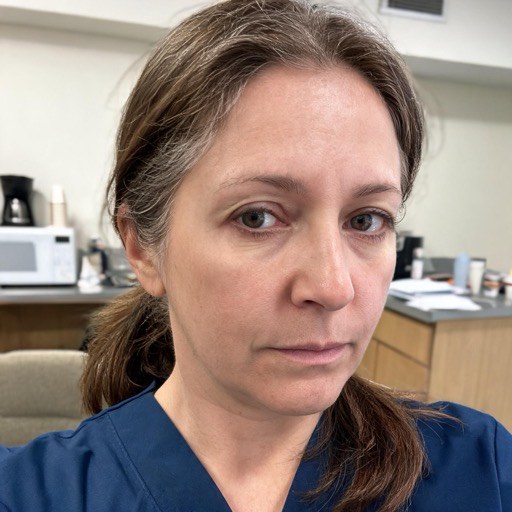
Marta Quinn, CVT
Veterinary technician, contributing · Portland, OR
Certified veterinary technician, 14 years in general and emergency practice. Translates the stuff your vet said too fast.
Comments
5 commentsRenee Talbot · Dayton, OH · Mar 5, 2026
saving this one. thank you
Bill Hargrove · Springfield, MO · Mar 12, 2026
Gus is fifteen and a half, beagle, and his ALP has been high since he was about nine so this all tracks. What got us was albumin actually, it slid down over two panels and that turned out to be a gut thing, he is on a prescription diet now and doing okay. Anyway he has also had eleven ear infections in his life and has decided in the last year that the correct place to sleep is the bathtub. Not on a towel in the bathtub. In the bathtub. We put a mat down and he pushed it out.
Marta Quinn · Mar 13, 2026
the bathtub thing is real, we hear it constantly, i think it is cool and the walls hold them up. glad the albumin got caught, that is exactly the number that earns a second look.
Priya N. · Somerville, MA · Mar 19, 2026
Gently pushing back on the ALP section. Our vet did not treat a high ALP as background at all, she went straight to imaging and we found gallbladder sludge that needed managing. Waiting and rechecking would have cost us months. I get that it is common, but reading this I would have felt reassured, and reassurance was the wrong thing for us.
Marta Quinn · Mar 21, 2026
that is fair and i am glad you said it. i was trying to get people off the ledge and probably leaned too far the other way. your vet had the dog in front of her and made the call, which is the actual argument i wanted to make.
Dave Kuiper · Grand Rapids, MI · Apr 1, 2026
does he need to fast for this or not, our appointment is 3pm and the no breakfast thing is rough on a twelve year old lab who thinks 6am is brunch
Cheryl A. · Tucson, AZ · Apr 16, 2026
Ours ran $189 and I understood maybe four lines of it. Beat the twenty minutes I spent googling in the lobby, anyway.
Comments close after 60 days because we cannot keep up with the spam. Email us instead. We read everything.